
The Science of Being Organized, Part 6: Emotional Clutter & Letting Go



You are holding a sweater you have not worn in five years. It does not fit. It is not your style anymore. Logically, you know it belongs in the donation bin. But as you hold it, a heavy wave of guilt washes over you. You remember who gave it to you, or how much money it cost, or the person you were when you bought it. Suddenly, your chest tightens. You carefully fold the sweater, place it back on the top shelf, and close the closet door.
The physical clutter remains because the emotional clutter is simply too heavy to process.
Welcome to Part 6 of The Science of Being Organized. Over the last five months, we have journeyed through the physical and neurological mechanics of our living spaces. We explored how visual chaos spikes cortisol, how neuroplasticity helps us build sustainable routines, how decision fatigue drains our daily battery, how mindfulness regulates our nervous system, and how the Reticular Activating System primes our brain to curate a calm home.
Today, we are stepping into the most sensitive territory of all. We are looking at the emotional weight of our possessions.
If you have ever felt paralyzed when trying to clear out a room, you are not failing. You are experiencing a very real, deeply ingrained neurological response. Today, we are going to unpack the science of why we attach meaning to objects, how to process sentimental items and decluttering, and how to finally let go of the things weighing you down without carrying an ounce of shame.
The Neuroscience of Sentimental Clutter
To understand why it is so hard to let go, we have to look at how the brain processes memory and ownership.
Our brains are essentially prediction machines, constantly trying to make sense of the world based on past experiences. Two key areas are involved in this process: the hippocampus (which forms and stores memories) and the amygdala (which processes emotions).
When you look at a childhood toy, a ticket stub, or a piece of inherited furniture, you are not just seeing wood, paper, or plastic. Your brain is using that physical object as an external hard drive. The visual cue of the object triggers the hippocampus to retrieve a specific memory, while the amygdala floods your body with the exact emotions you felt during that original moment.
You are literally reliving the past.
From an evolutionary standpoint, this was incredibly useful. Recognizing a specific type of berry and remembering that it made you sick kept you alive. But in our modern world, where we are surrounded by thousands of mass-produced items, this neurological mechanism goes into overdrive. We begin to infuse inanimate objects with our own life force. We start to believe that the memory actually lives inside the item.
This leads to a psychological phenomenon known as the Endowment Effect.
Coined by behavioral economists, the Endowment Effect describes our tendency to place a much higher value on an object simply because we own it. In laboratory studies, participants who were given a basic coffee mug demanded twice as much money to sell it as they were willing to pay to buy it in the first place. The moment the mug became “theirs,” their brain rewired its value.
When you combine the Endowment Effect with the emotional memory loop of the hippocampus and amygdala, it is no wonder that letting go of stuff feels like losing a piece of yourself. Your brain registers the loss of a sentimental object in the same region (the insula) that processes physical pain.
Releasing items literally hurts. But understanding this biology is the first step toward freedom.
The Three Faces of Emotional Clutter

Not all emotional clutter is created equal. When we feel stuck, it is usually because our belongings are anchored by one of three specific emotional weights. Identifying the specific weight is the key to finally lifting it.
1. The Weight of Guilt (The Sunk Cost Fallacy)
Guilt is the most common emotion hidden inside our closets. It usually comes in two forms.
First is financial guilt. You spent good money on an expensive gadget or a designer coat that you never ended up using. Keeping the item is a way for your brain to delay admitting a mistake. In psychology, this is known as the Sunk Cost Fallacy. We believe that if we just keep the item long enough, the original investment will somehow be justified.
Second is relational guilt. Aunt Mary bought you a decorative vase for your wedding. It clashes with everything you own, but putting it in a donation box feels like a direct rejection of Aunt Mary’s love. We confuse the physical object with the relationship itself.
2. The Weight of Identity (Aspirational Clutter)
Sometimes we hold onto things not because of who we were, but because of who we hoped to be.
Look closely at your shelves. Do you see the guitar you never learned to play? The stacks of difficult novels you intended to read? The specialized baking equipment you bought five years ago? This is aspirational clutter.
These objects represent an unfulfilled identity. Letting go of them feels like giving up on a dream. Alternatively, we hold onto identities from our past. We keep the corporate blazers long after we transition to working from home, or the sports gear from high school, because those items validate a part of us that we are afraid to lose.
3. The Weight of Memory (Sentimental Attachment)
This is the classic form of emotional clutter. It encompasses the baby clothes, the inherited china, the old photographs, and the souvenirs.
The fear driving this type of clutter is profound. We are terrified that if we let go of the physical object, we will lose the memory associated with it. We believe that by keeping the box of childhood drawings, we are preserving our child’s youth. We believe that by keeping our grandmother’s teacups, we are honoring her legacy.
Untangling the Emotion from the Object
How do we break these deeply ingrained neurological loops? How do we let go of stuff without feeling like we are abandoning our past or disrespecting our loved ones?
The answer lies in cognitive reframing. We must consciously separate the physical item from the emotional meaning we have projected onto it.
Reframing Guilt: When dealing with financial guilt, remind yourself that the money is already gone. Keeping the item does not refund your bank account; it only charges you daily “rent” in the form of mental stress and physical space. Consider the donation a sunk cost, and reclaim your peace of mind. For relational gifts, remember that the true purpose of a gift is the momentary exchange of joy between the giver and the receiver. Once the gift is opened and the gratitude is expressed, the object has successfully fulfilled its purpose. You are not obligated to store it forever. Aunt Mary loves you, not the vase.
Reframing Identity: Curating your home is an act of acknowledging who you are today. Releasing aspirational clutter is not a failure. It is a beautiful, radical act of self-acceptance. By letting go of the guitar you will never play, you create physical and mental bandwidth to engage deeply with the hobbies you actually enjoy right now. Honor your past identities, but do not let them pay rent in your current life.
Reframing Memory: This is the most crucial neurological truth you can learn: the memory lives in your brain, not in the ceramic mug. The love you have for your grandmother is woven into your neural pathways, your heart, and your stories. The teacup is just clay. If the object brings you joy and you use it, keep it. But if it sits in a dusty box in the garage, causing you anxiety, it is no longer honoring anyone.
Need support untangling the emotion from your space? > Letting go of aspirational or sentimental items is heavy work, and you do not have to carry it alone. Whether you need a virtual guide to help you reframe your decisions or hands-on support to physically clear the room, I am here to help. Explore my organizing services here, and let’s lift the weight together.
Creating Space for Who You Are Now
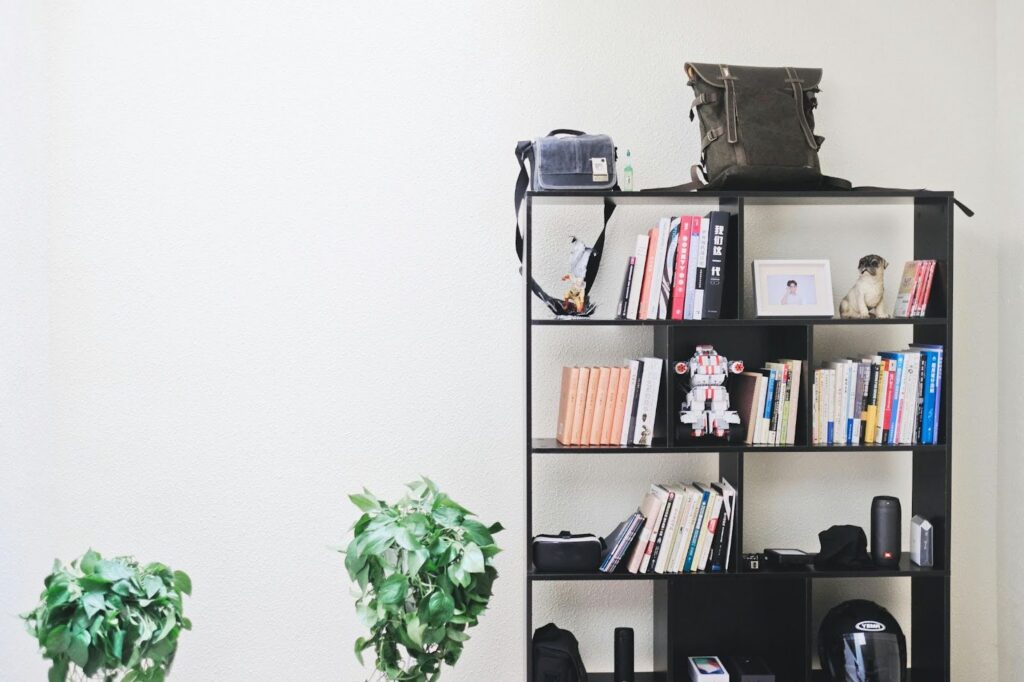
When you finally begin releasing emotional clutter, a profound shift happens in your nervous system.
Every time you let go of an item driven by guilt, fear, or a past identity, you send a powerful signal to your brain. You are telling your subconscious that your current comfort, your current peace, and your current identity matter more than the past.
You stop living in a museum of your own history. You start living in a sanctuary designed for your present moment. The physical lightness of a curated space translates directly into emotional buoyancy. You will find that you have more energy, more clarity, and a deeper capacity to connect with the people around you, simply because your brain is no longer exhausted by the ghosts of objects past.
Practical Steps for Processing Sentimental Items
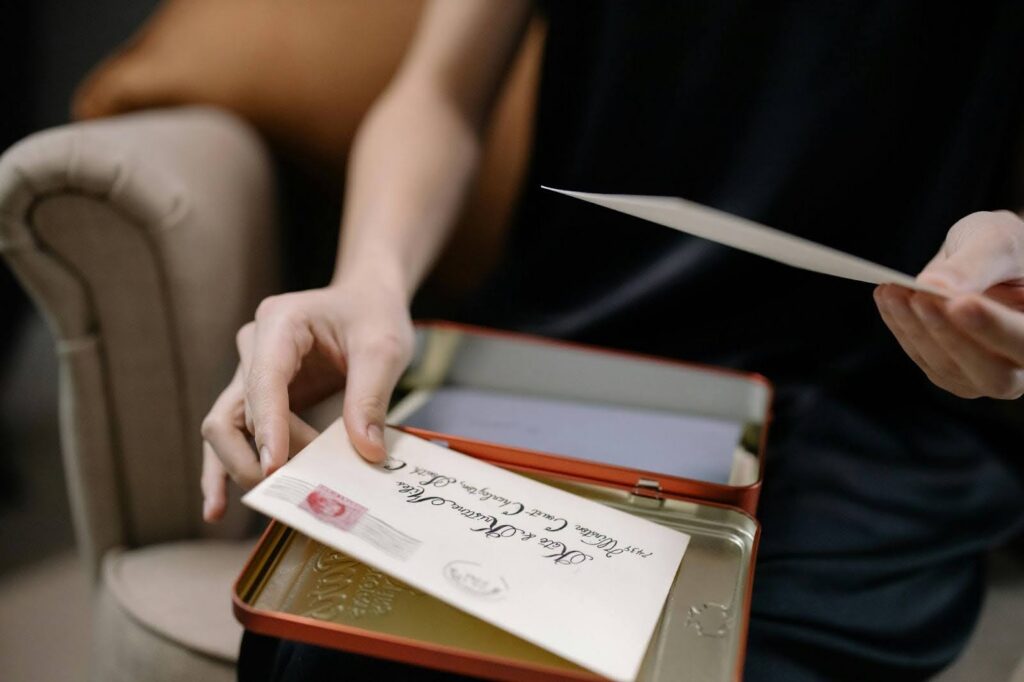
When you are ready to address the emotional layers of your home, use these gentle, brain-friendly strategies.
- The “Boundary” Method: Sentimental items have a habit of taking over. Instead of saying “I have to get rid of my childhood memories,” give those memories a dedicated physical boundary. Choose one beautiful, high-quality memory box. You can keep whatever fits comfortably inside the box with the lid closed. This forces your brain to prioritize the truly special items over the generic ones, turning a hoarding instinct into a curating instinct.
- The Digital Archive Strategy: If you are terrified of forgetting a memory, digitize it. Take a high-quality photograph of the concert ticket, the bulky child’s art project, or the inherited armchair that doesn’t fit in your living room. Create a dedicated digital album on your phone or computer. Your hippocampus will still trigger the memory when you swipe through the photos, but you recover your physical square footage.
- The “Keep the Best, Release the Rest” Rule: You do not need to keep the entire 50-piece set of inherited china to honor your loved one. Keep the gravy boat or one beautiful teacup to display proudly on a shelf, and release the rest to someone who will actually use it for their family dinners. Honor the past in small, intentional doses rather than overwhelming volumes.
- The Gratitude Release: This sounds simple, but it is neurologically powerful. Before you place an emotional item in a donation bag, hold it for a moment and mentally say “thank you.” Thank the unworn dress for teaching you what your style isn’t. Thank the baby blanket for keeping your child warm. Gratitude stimulates the release of dopamine and serotonin, easing the pain of the insula and making the act of letting go feel rewarding rather than punishing.
Conclusion: A Gentle Release
Letting go of our possessions is rarely about the stuff itself. It is a mirror reflecting how we handle transitions, grief, aging, and growth.
Please be gentle with yourself. If you try to clear a shelf and find yourself weeping over an old photograph, you are not doing it wrong. You are processing your life. Allow the emotion to move through you. Take a breath. Remind yourself that you are safe, your memories are secure within you, and you are allowed to make room for the person you are becoming.
You are curating your future. Let it be beautiful. Let it be light.
Next month: We bring this entire journey together in our final installment, Part 7: The Organized Mindset Blueprint. We will move from theory into daily action, exploring how to build identity-based systems that last. Get ready to discover why changing your identity is the absolute secret sauce for maintaining a calm, supportive home for the long haul.
Frequently Asked Questions
Why do I feel so exhausted after dealing with sentimental items?
You are experiencing severe decision fatigue compounded by emotional processing. Every item you touch forces your brain to retrieve a memory, process an emotion, and make a complex choice about the future. This burns an immense amount of glucose in your prefrontal cortex. Treat emotional clearing like a heavy workout. Keep sessions short (under an hour) and rest afterward.
What should I do with family heirlooms that nobody wants?
This is a very common source of guilt. Remember that passing down an item should be an offering of a gift, not the transferring of a burden. If neither you nor your relatives have the space or desire for the item, consider selling it and using the funds for a meaningful family experience, or donating it to a historical society or charity where it will be valued. The heirloom’s journey in your family has simply reached its natural, peaceful end.
How do I help a partner or parent let go of their emotional clutter?
You cannot force someone to release their emotional attachments. Pushing them usually triggers the amygdala’s threat response, causing them to hold on tighter. Instead, lead by example. Curate your own spaces. When they are ready, offer to sit with them as a neutral, non-judgmental presence. Ask curious questions like, “What is your favorite memory attached to this?” Let them process the emotion verbally before asking them to make a decision about the object.
Is it normal to regret giving something away?
A brief flash of regret is completely normal. It is just your brain reacting to a broken pattern. However, true, long-lasting regret over a donated item is exceedingly rare. Usually, within a few days of releasing the item, the anxiety fades and is replaced by a profound sense of relief and visual peace.
Ready to curate a home that supports who you are now? If you are tired of living in a museum of your past and want to create a beautifully ordered sanctuary for your present, I would love to help. I specialize in compassionate, neuro-inclusive systems designed for your peace of mind.Click here to learn more about my in-home and virtual services and take the first step toward a lighter, more breathable home.
References
- Kahneman, D., Knetsch, J. L., & Thaler, R. H. (1990). Experimental Tests of the Endowment Effect and the Coase Theorem. Journal of Political Economy.
- Belk, R. W. (1988). Possessions and the Extended Self. Journal of Consumer Research.
- Arkes, H. R., & Blumer, C. (1985). The psychology of sunk cost. Organizational Behavior and Human Decision Processes.
- Phelps, E. A. (2004). Human emotion and memory: interactions of the amygdala and hippocampal complex. Current Opinion in Neurobiology.
- Frost, R. O., & Hartl, T. L. (1996). A cognitive-behavioral model of compulsive hoarding. Behaviour Research and Therapy.


