
Neurodivergent Organizing, Part 1: What is Neuro-Inclusive Design?


You stand in the middle of your living room staring at a massive stack of unopened, intimidating mail. A brand new color-coded planner sits completely blank on the kitchen counter, quietly mocking your very best intentions. Rows of matching acrylic bins have somehow become chaotic catch-alls for random, unrelated household items. The environment feels incredibly heavy and profoundly burdensome. Every horizontal surface reminds you of an uncompleted task, an abandoned routine, or an expensive system that has fundamentally failed you.
Shame bubbles up in your chest as you survey the chaotic space. Everyone else seemingly maintains a perfectly ordered space while you struggle to put away a single pair of shoes at the end of a long day. The stark contrast between your daily reality and the polished images on social media creates a deep, agonizing sense of inadequacy. The modern world insists that an ordered home is simply a matter of discipline, effort, and basic moral fortitude.
Welcome to the first official installment of our new neuro-inclusive series. Over the next four weeks, we are moving far beyond generic advice to provide genuine, lasting support. We will explore how to help neurodivergent minds truly thrive in their physical spaces without relying on toxic guilt. Today, we are starting at the very beginning of this transformational journey. We are defining exactly what neuro-inclusive design means for your daily life, your energy reserves, and your overall mental health.
The Failure of Traditional Systems

Historically, professional advice has relied heavily on strict categorization and hidden storage solutions. Standard methods consistently assume every person has an identical, robotic capacity for sustained attention. They expect your working memory to function flawlessly at all times, regardless of your stress levels. The entire industry is built upon the deeply flawed idea that human beings operate exactly like programmable computers.
Traditional systems require you to remember exactly where an item lives long after you put it away behind a solid door. They demand a remarkably high level of daily maintenance just to keep the visual aesthetic beautifully intact. This approach demands constant, exhausting mental gymnastics from dawn until dusk. The sheer energy required to simply participate in your own home becomes completely unsustainable over extended periods of time.
But human brains are beautifully diverse and wildly, wonderfully varied in their mechanical operations. The expectation of universal cognitive function is a profound disservice to anyone who operates outside the standard neurological mold. Assuming that one rigid method of managing a household will work perfectly for every single person leads to massive, predictable frustration. The standardized approach entirely ignores the biological reality of how different minds process complex spatial information.
For individuals navigating ADHD, autism, or severe burnout, those traditional systems are practically guaranteed to fail spectacularly. The rigid structure demands far too much sustained focus for a brain that naturally seeks novelty and stimulation. The hidden storage creates an out-of-sight barrier that completely erases the memory of the valuable objects located inside. The strict categories demand a level of micro-decision-making that rapidly and aggressively drains your daily energy reserves.
Attempting to maintain an incompatible system creates intense visual clutter anxiety when the fragile framework inevitably collapses. The resulting paralysis is not a character flaw, a moral failing, or a sign of innate laziness. It is a very real biological response to an environment that demands far too much cognitive load from a depleted nervous system. The deep shame you feel is merely a byproduct of trying to force your unique, brilliant brain into a rigid neurotypical mold.
The Neuro-Inclusive Paradigm Shift
Design philosophies in the neuro-inclusive space flip the entire organizational paradigm completely upside down. Let us examine the core tenets of this truly life-changing approach to home management:
- Flipping the Paradigm: The methodology stops asking the individual to change their fundamental nature and starts demanding significantly more functionality from the environment. The focus dramatically shifts from achieving a specific visual aesthetic to creating a profoundly supportive, personalized ecosystem.
- Adapting the Space: Instead of forcing your brain to adapt to the physical space, we adapt the physical space to completely support your brain. We actively study your natural pathways, organic habits, and instinctual daily movements. We observe exactly where items naturally accumulate on their own and build robust systems directly in those specific locations.
- Designing for Low Energy: True neurodivergent organizing requires absolutely zero masking and absolutely zero willpower to maintain on a daily basis. The systems must function easily and flawlessly on your lowest energy days. The barrier to entry must be lowered aggressively until the resistance essentially disappears entirely.
- Working with Instincts: We must stop fighting your natural instincts and start working alongside them. If you naturally drop your keys on the dining room table every single day, the solution is placing a beautiful, designated catch-all bowl directly on the dining room table rather than enforcing a rigid rule about walking to the entryway console.
- Auditing with Compassion: By understanding these core tenets, you can begin to audit your own home with a fresh, compassionate perspective. You will learn to easily spot the invisible friction points that aggressively drain your daily energy, beginning your physical transformation with a deep, validating understanding of your own unique cognitive needs.
Pillar One: Honoring Object Permanence
Pillar One focuses entirely on honoring object permanence in every single room of your house. This specific concept is absolutely crucial for anyone who regularly struggles with working memory deficits. Object permanence is the psychological understanding that objects continue to exist even when they cannot be actively observed by the senses. For many neurodivergent people, this vital cognitive skill is highly inconsistent or sometimes entirely absent.
Vital working memory functions act as the brain’s temporary, delicate sticky note system. When that sticky note frequently falls off due to a neurological difference, items hidden inside opaque drawers effectively cease to exist in reality. You end up buying expensive duplicate items purely because you cannot remember what you already own. You forget to pay important bills simply because the paper is tucked neatly inside a stylish, closed filing cabinet.
Without constant, clear visual reminders, the daily management of a complex household becomes incredibly difficult and fraught with anxiety. Important tasks routinely slip through the cracks despite your absolute best intentions. The resulting chaotic environment reinforces the false, damaging belief that you are simply bad at managing your adult life. The scientific reality is that your physical environment is actively hiding vital, necessary information from your struggling brain.
Hiding essential items behind solid doors is the exact opposite of what a neurodivergent mind truly requires to function optimally. The intense societal desire for a minimalist aesthetic directly sabotages the biological need for functional, accessible visibility. To truly support your beautiful brain, you must intentionally blur the rigid line between concealed storage and open display. The physical space must act as a highly reliable external hard drive for your fragile memory.
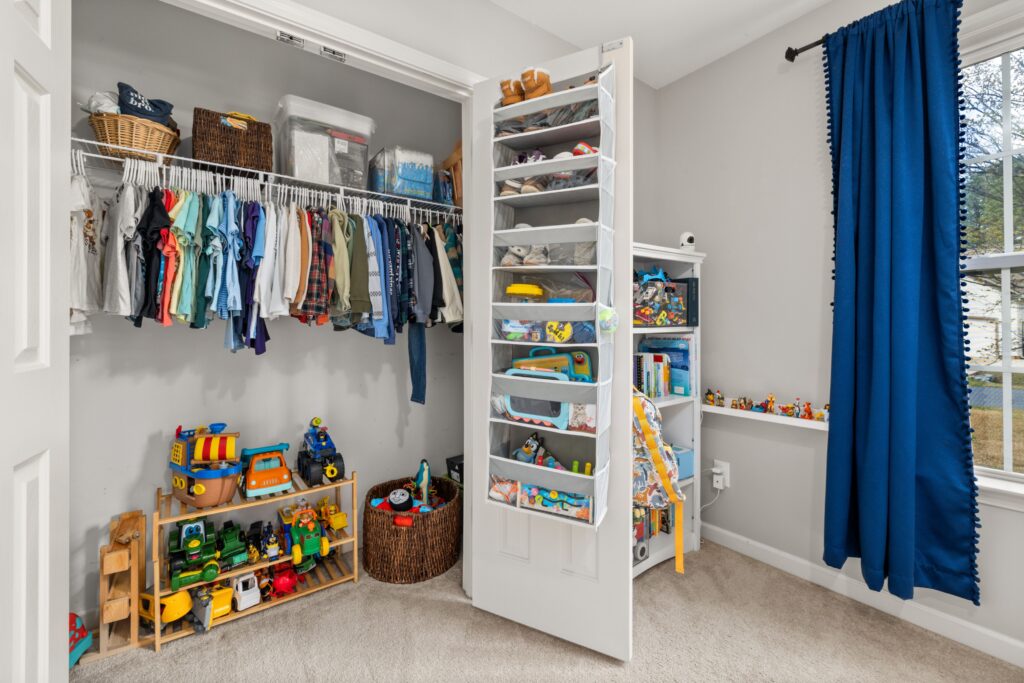
Therefore, neuro-inclusive systems heavily utilize open shelving, transparent containers, and highly visible hook systems. We completely remove closet doors to create highly visible, easily accessible drop zones for clothing and gear. We label bins clearly with bold text, distinct colors, or simple, universally recognized icons. The primary goal is to make every single category immediately identifiable without requiring you to open a single drawer or lift a single restrictive lid.
These visually open systems function as highly effective ADHD home hacks that immediately reduce daily mental strain. By keeping your tools and belongings completely visible, you drastically reduce the cognitive steps required to locate them. You also significantly increase the likelihood of successfully returning those items to their proper, designated place. The visual cue acts as a gentle, passive reminder that beautifully guides your behavior without demanding active, exhausting thought.
Consider the standard kitchen pantry setup found in most modern, aesthetically driven homes today. A neuro-inclusive approach might involve removing the bulky packaging from snacks and placing them in clear acrylic bins directly at eye level. You instantly know exactly what you have available and exactly what you need to purchase at the grocery store. The heavy mental load of actively managing household inventory is entirely outsourced to the physical environment.
Pillar Two: Lowering the Sensory Load
Pillar Two directly addresses the vital, non-negotiable need to actively lower the sensory load of your living space. Atypical sensory processing experiences are incredibly common among neurodivergent individuals and highly sensitive people. The brain receives constant sensory input from the surrounding environment and struggles mightily to filter out the irrelevant, background data. Every sight, sound, smell, and texture is processed with equal, deeply exhausting intensity.
Intense sensory processing differences frequently turn a typical home into a chaotic, overwhelming minefield. Bright overhead lights feel physically abrasive and can easily trigger debilitating headaches. Complex wallpaper patterns and busy textiles vibrate with overwhelming, loud energy that distracts the mind. The subtle hum of a refrigerator or the scratchy texture of a specific rug can cause genuine, physical distress.
In a standard room, visual noise is often the most significant, unrelenting contributor to severe sensory overload. Visual noise includes unnecessary decorative items, sharply clashing colors, and flat surfaces covered in totally unrelated items. Every single physical object in your direct field of vision actively demands a tiny fraction of your brain’s limited processing power. A highly cluttered room essentially screams at your nervous system continuously, from morning until night.
Processing this constant, heavy stream of visual data leaves very little energy remaining for actual, important life tasks. You feel completely exhausted before you even begin your day, simply from existing in the space. The scientific connection between a chaotic physical environment and deep mental fatigue is absolute, proven, and totally undeniable. Your brain desperately needs a quiet break from the constant barrage of external, demanding stimuli.
Consequently, creating a low-stimulation sanctuary is a primary, foundational goal of neuro-inclusive design practices. We aggressively prioritize soft, indirect lighting over harsh, aggressive overhead bulbs in every single room. We carefully utilize cohesive, muted color palettes that gently soothe the eye rather than demanding sharp attention. We focus heavily on drastically reducing the total number of visible items in spaces specifically meant for deep rest.
It requires deliberately stripping away the visual noise to create a truly sensory friendly bedroom environment. Your dedicated sleeping space should feature minimal bold patterns, incredibly soft textures, and completely clear horizontal surfaces. We aggressively remove electronics, blinking lights, and distracting, unnecessary decor from the immediate sleeping area. The entire room must clearly and consistently signal to your brain that it is time to transition into a state of deep recovery.
Imagine waking up in a peaceful room that literally feels like a gentle, collective exhale. The lighting is naturally soft, the colors are heavily muted, and there are absolutely no immediate visual demands on your limited attention. Your nervous system remains beautifully regulated as you slowly begin your morning routine. This foundational, environmental calm significantly increases your physical capacity to handle the heavy demands of the outside world.
Pillar Three: Bypassing Executive Dysfunction
Pillar Three directly tackles the profound challenges of bypassing executive dysfunction in your daily routines. Here is how we break down and bypass these specific hurdles:
- Understanding the Misfire: Executive function operates as the central management system of the human brain, controlling task initiation and working memory. When this delicate system misfires, executing seemingly simple routines becomes monumentally difficult.
- The Broken Bridge: Complex executive functions act as the crucial bridge between knowing exactly what to do and actually doing it. For a neurodivergent person, you can logically understand a task takes two minutes, yet remain physically unable to take the very first step.
- Zero Barrier to Entry: During moments of heavy executive dysfunction, the barrier to entry for any household activity must be absolute zero. Complex sequences, like opening a heavy drawer and pulling out an organizer, actively paralyze the entire operation before it even begins.
- Minimizing Activation Energy: Initiating even a minor task requires an immense amount of internal activation energy from a depleted brain. We must aggressively dissect daily routines to eliminate any step requiring unnecessary physical movement or complex mental effort.
- The Path of Least Resistance: Successfully bypassing this hurdle involves intentionally implementing highly accessible solutions. Replace complex filing systems with visually open drop baskets, swap frustrating clothes hangers for sturdy wall hooks, and remove heavy lids from laundry hampers entirely.
- Evaluating Friction Points: You must evaluate your home with a critical eye toward physical barriers. If putting away shoes requires opening a heavy closet door, the solution is moving the shoe rack directly into the open, highly trafficked hallway.
- Embracing Curiosity Over Judgment: Look at the daily routines that consistently fail with deep, genuine curiosity rather than harsh judgment. A giant pile of clothes on the bedroom floor is never a sign of laziness; it is a clear, valuable data point indicating that the current laundry system has far too many steps.
A Highly Supportive Sanctuary
Perfectionism has absolutely no place in a home designed to support a neurodivergent mind. The overarching goal of neuro-inclusive design is to build a highly supportive infrastructure for your actual, messy life. We completely reject the generic, one-size-fits-all advice that breeds toxic shame and endless frustration. We celebrate the unique, beautiful mechanics of your brilliant, complex brain by building systems that genuinely work.
Ultimately, you deserve a home that feels like a deeply supportive sanctuary, not a constant battleground. Stop trying to adapt yourself to a rigid, unforgiving aesthetic standard that was never designed for you. Begin observing your natural habits and designing functional systems that softly catch you exactly where you naturally fall. The path to a peaceful home begins with radical self-compassion and deeply functional, highly personalized design.
Join us next week for the exciting second installment of this transformational series. We will take a deep, comprehensive dive into ADHD and object permanence in the home. We will explore specific, highly actionable strategies for building visually open systems that still feel calm, curated, and beautifully ordered. Your incredible journey toward a truly supportive, neuro-inclusive home has only just begun.


