Organizing for ADHD: Adapting Your Home to Support Your Brain
OUR SERVICES
You stand in the center of your bedroom surrounded by an overwhelming visual chorus of unfinished tasks. A basket of freshly laundered clothes sits untouched on a chair. A stack of important documents rests precariously on the edge of your nightstand. In your hands is a brand new, highly recommended daily planner. Deep down, you genuinely want to create an ordered, peaceful environment. In fact, you logically understand every single step required to put the room back together. Yet your body feels completely paralyzed, and the heavy weight of invisible friction prevents you from taking a single step forward. If this scene feels familiar, you are not alone, and organizing for ADHD can look very different from everything you have been taught.
October marks ADHD Awareness Month across the globe. This month provides a vital opportunity to dismantle the heavy shame that so many neurodivergent individuals carry regarding their physical spaces. The modern world is aggressively built for a neurotypical brain. The systems sold in major retail stores and celebrated on social media demand a rigid, robotic level of sustained attention. So when you try to force your brilliantly complex, wildly dynamic brain into these standard boxes, the result is deep exhaustion and inevitable burnout.
You are not failing at managing your home. You are simply trying to operate a unique operating system using a completely incompatible instruction manual. Organizing for ADHD requires a profound shift in perspective. We must stop asking you to fundamentally change your nature. Instead, we must demand significantly more functionality from your physical environment. By understanding the specific biological mechanics of an ADHD brain, we can build a deeply supportive sanctuary that catches you exactly where you naturally fall.
The Myth of the Broken Compass
The most damaging misconception surrounding ADHD is the belief that a chaotic environment is a symptom of laziness or apathy. Traditional organization advice relies heavily on moral judgments. It implies that if you simply cared more or tried harder, your home would remain perfectly ordered. Unfortunately, this toxic narrative entirely ignores the reality of executive dysfunction.
Essentially, executive function operates as the central management system of the human brain. It actively controls task initiation, working memory, emotional regulation, and multi-step problem-solving. In an ADHD brain, this delicate system is highly inconsistent. You possess a brilliant compass, but the magnetic field frequently shifts. You know exactly where true north is, but the internal mechanisms required to walk in that specific direction are temporarily offline.
When your executive function misfires, initiating a routine household task requires an immense, often painful amount of internal activation energy. A task that takes a neurotypical person two minutes might require two hours of mental preparation for an ADHD brain. In other words, the exhaustion you feel is a biological reality. The deep resistance is not a character flaw. It is a neurological roadblock.
To overcome this roadblock, we must completely remove the moral weight from the items in your home. After all, a pile of unfolded laundry is not a symbol of your worth as a human being. It is simply a collection of fabric that requires a new system. By removing the harsh internal dialogue, you free up the precious mental energy required to actually build a supportive environment. You deserve a home that acts as a gentle landing pad, not a constant, demanding battleground.
Organizing for ADHD With Radical Visibility
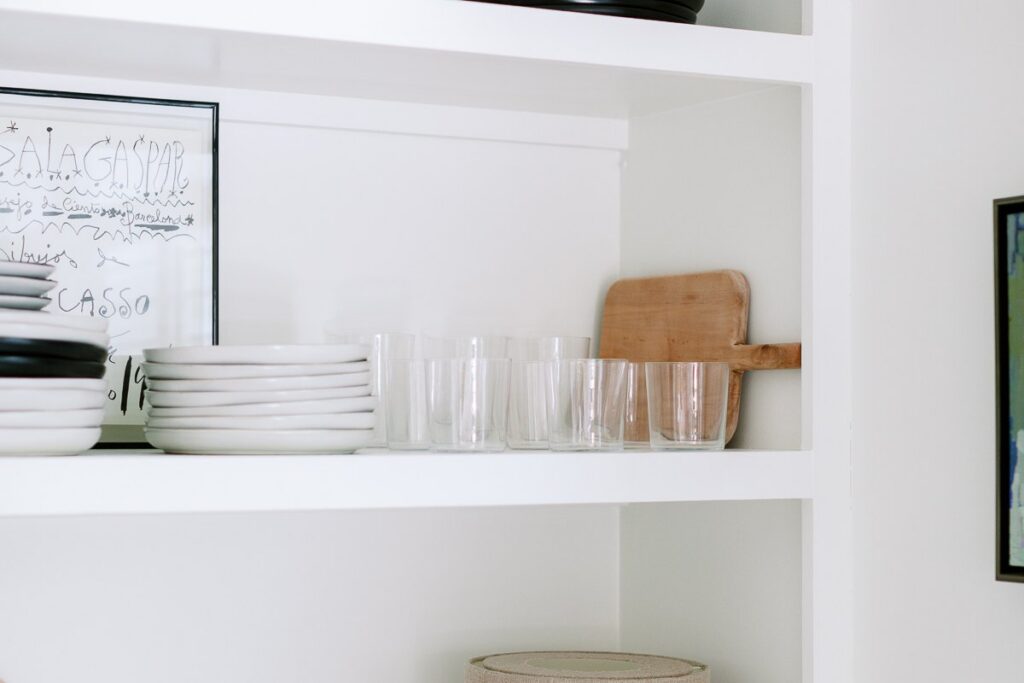
One of the core hallmarks of the ADHD experience is a uniquely structured working memory. This specifically impacts your experience of object permanence. While you logically know an object exists when it leaves your sight, your brain struggles to reliably retrieve that specific file without a direct visual cue. This biological reality turns standard home organization into a daily minefield.
Traditional systems, however, heavily prioritize hidden storage. They demand that you tuck your belongings away in deep drawers, solid boxes, and dark closets to achieve a minimalist aesthetic. For an ADHD brain, placing an item behind a solid door is functionally identical to throwing it away entirely. As a result, you forget about the fresh produce in the bottom drawer of your refrigerator until it spoils. You also purchase duplicate household supplies because you cannot remember what you already own. Meanwhile, important bills slip out of sight because they are neatly filed inside an opaque cabinet.
Instead, organizing for ADHD requires embracing radical visibility. We must build physical systems that serve as highly reliable external hard drives for your working memory. The physical space must gently remind you of your resources without requiring any active thought.
- Remove the Barriers: Consider removing the doors from the closets that cause you the most daily frustration. Exposing your wardrobe provides immediate visual access to your options and significantly reduces the mental effort required to get dressed.
- Utilize Transparent Containment: Swap solid storage bins for clear acrylic containers or open wire baskets. When you can instantly see your daily coffee supplies or your fresh vegetables, the cognitive load required to make a meal drops drastically.
- Implement Passive Reminders: Use open shelving to intentionally display the items you use daily. When your tools and belongings live in plain sight, the visual cue acts as a gentle guide for your behavior.
Lowering the Barrier to Entry
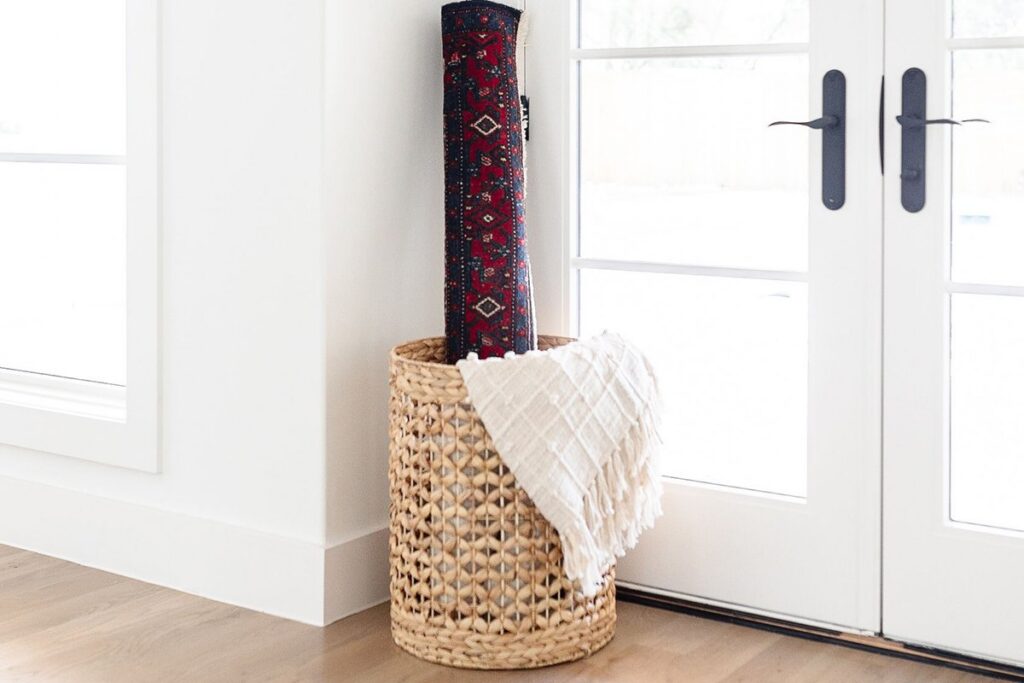
A neurodivergent brain is constantly seeking dopamine to remain engaged and regulated. Complex, multi-step routines actively deplete dopamine reserves and trigger immediate task paralysis. If an organizational system requires more than one or two steps to maintain, an ADHD brain will almost certainly reject it entirely.
Consider the standard laundry hamper. It typically features a heavy lid and resides inside a closed closet. To simply throw away a worn shirt, you must walk to the closet, open the door, lift the lid, deposit the shirt, close the lid, and close the door. Unsurprisingly, this six-step sequence is perfectly destined for failure on a low-energy day. The sheer complexity of the routine paralyzes the entire operation before it even begins.
Organizing for ADHD focuses entirely on aggressively minimizing the required energy expenditure for every single task. We must dissect your daily routines to identify the exact point of friction causing the delay, and then we must entirely eliminate it. The barrier to entry for managing your home must be absolute zero.
- The Path of Least Resistance: Remove the heavy lids from your laundry hampers entirely. Allow yourself to simply toss items from across the room. The goal is containment, not aesthetic perfection.
- Frictionless Storage: Replace complex, color-coded filing systems with simple, visually open drop baskets. Swap frustrating clothes hangers for sturdy, highly accessible wall hooks.
- Decentralized Supplies: Stop forcing yourself to walk across the house for basic necessities. If you frequently need scissors in the living room, place a beautiful pair directly on the coffee table. Build micro-stations of essential supplies exactly where you naturally use them.
Honoring Your Natural Pathways
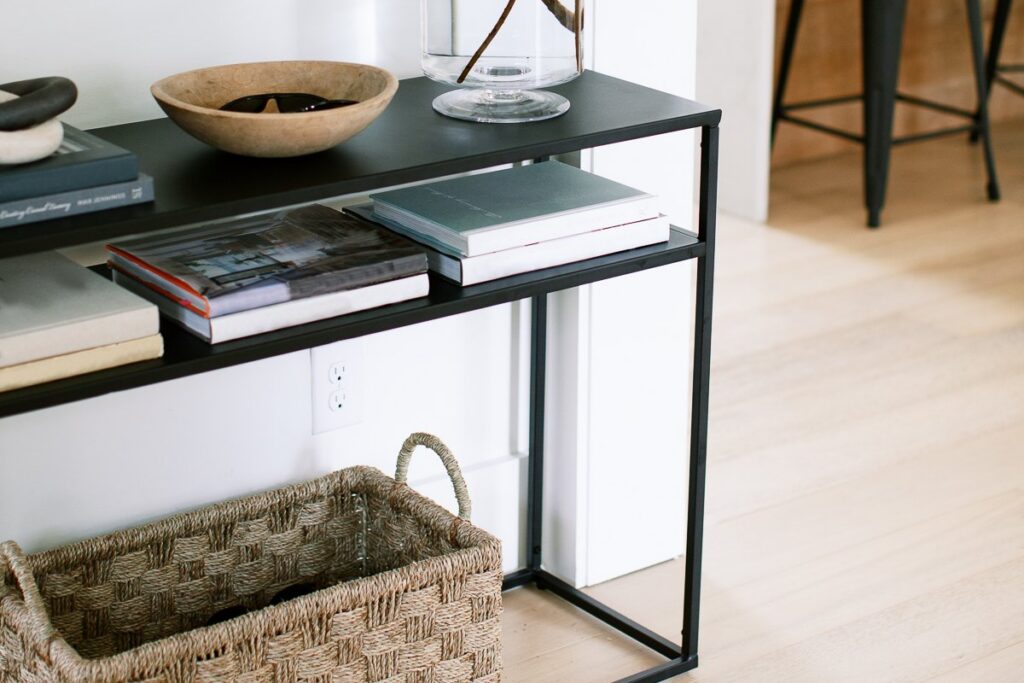
For decades, you have likely been told to break your bad habits and force yourself to adopt better routines. This advice is fundamentally exhausting. Your natural movements and organic pathways provide highly valuable data about how your brain naturally functions. Instead of fighting your deeply ingrained instincts, neuro-inclusive design demands that we actively work alongside them.
When organizing for ADHD, look at the localized piles of clutter that consistently form in your home. A giant stack of mail on the entryway console or a pile of shoes by the back door are not signs of failure. They are your brain clearly communicating exactly where a functional system needs to be built. Your physical environment is actively providing actionable feedback about your unique cognitive needs.
For example, if you naturally drop your keys and sunglasses on the dining room table every single day, the solution is not a rigid rule about walking to the entryway hook. The solution is placing a beautiful, designated catch-all tray directly on that specific corner of the dining room table. We must validate your natural habits while providing a gentle physical boundary to contain them.
- Establish Action Zones: Create highly visible action zones exactly where you naturally pause. Mount a visual sorting bin immediately next to the front door for incoming mail.
- Support the Floordrobe: Acknowledge the reality of your daily habits. If you naturally drop worn clothing on a specific chair, place a dedicated open basket exactly in that spot.
- Follow the Data: Approach your physical friction points with deep curiosity rather than harsh judgment. Let your natural habits guide the permanent placement of your belongings.
Organizing for ADHD Begins With Self-Compassion
You absolutely deserve a home that feels like a deeply supportive sanctuary. Stop trying to adapt yourself to a rigid, unforgiving standard that was never designed for your brilliant mind. By embracing visibility, lowering the barrier to entry, and honoring your natural pathways, you can build a space that truly celebrates how you operate. This October, give yourself the profound gift of radical self-compassion. Your incredible journey toward a neuro-inclusive home begins the exact moment you stop fighting your own instincts. And if you would love a partner in creating it, explore our organizing services.
October 25, 2026
ABOUT ME
FIND OUT MORE
Not everyone gets organized in the same way.
Your Organizing Personality
The items in one's space should should be intentionally arranged to promote efficiency, peace-of-mind, beauty, personal growth, ethical responsibility, and joy.
WORK WITH ME
My mission is to transform spaces into those that empower my clients to be their ideal selves. With my guidance, you can experience the joy of an intentionally curated space that fosters creativity and personal growth.
